
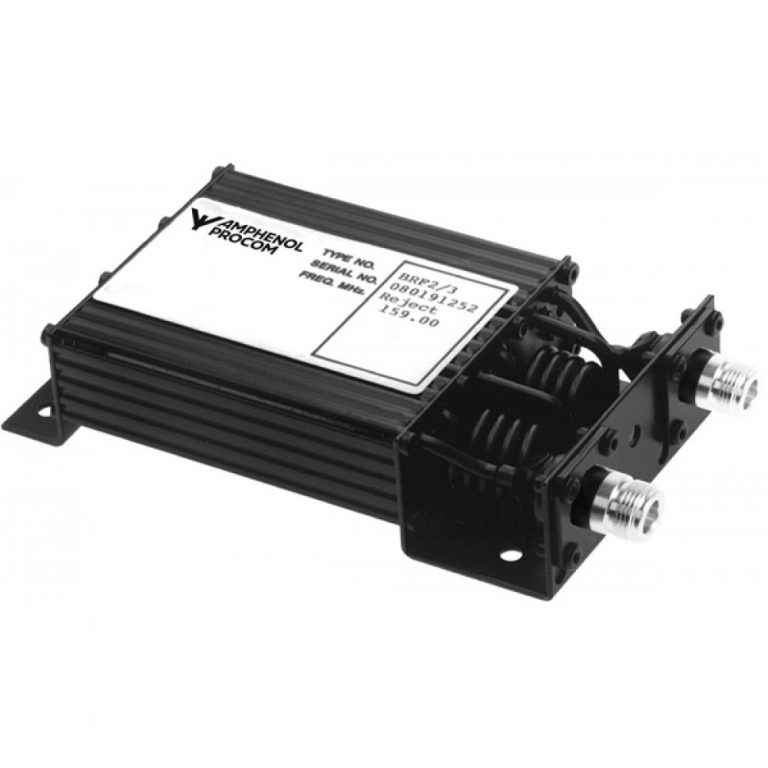
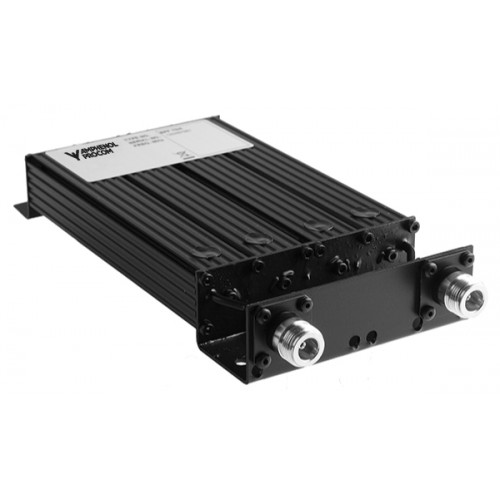
Procom Filters

A professional range of VHF and UHF band-pass, notch, and pass-reject filters designed to reduce interference and protect radio communication systems. Covering frequency ranges across 136–175 MHz, 144–175 MHz, 380–470 MHz, and 406–470 MHz, these filters are suitable for use with transmitters, receivers, preselectors, and multi-coupling systems.

The range includes 3- and 4-resonator notch filters, compact helical resonator band-pass filters, and pass-reject filters for applications where close frequency spacing requires high selectivity. Built with carefully selected materials for reliable operation over a wide temperature range, these filters can be supplied in multiple model variations to suit required frequency bands, pass/reject spacing, and system requirements.

SKU: BPF-PASS-REJECT-FILTERS Categories: , , , , Tags: ,

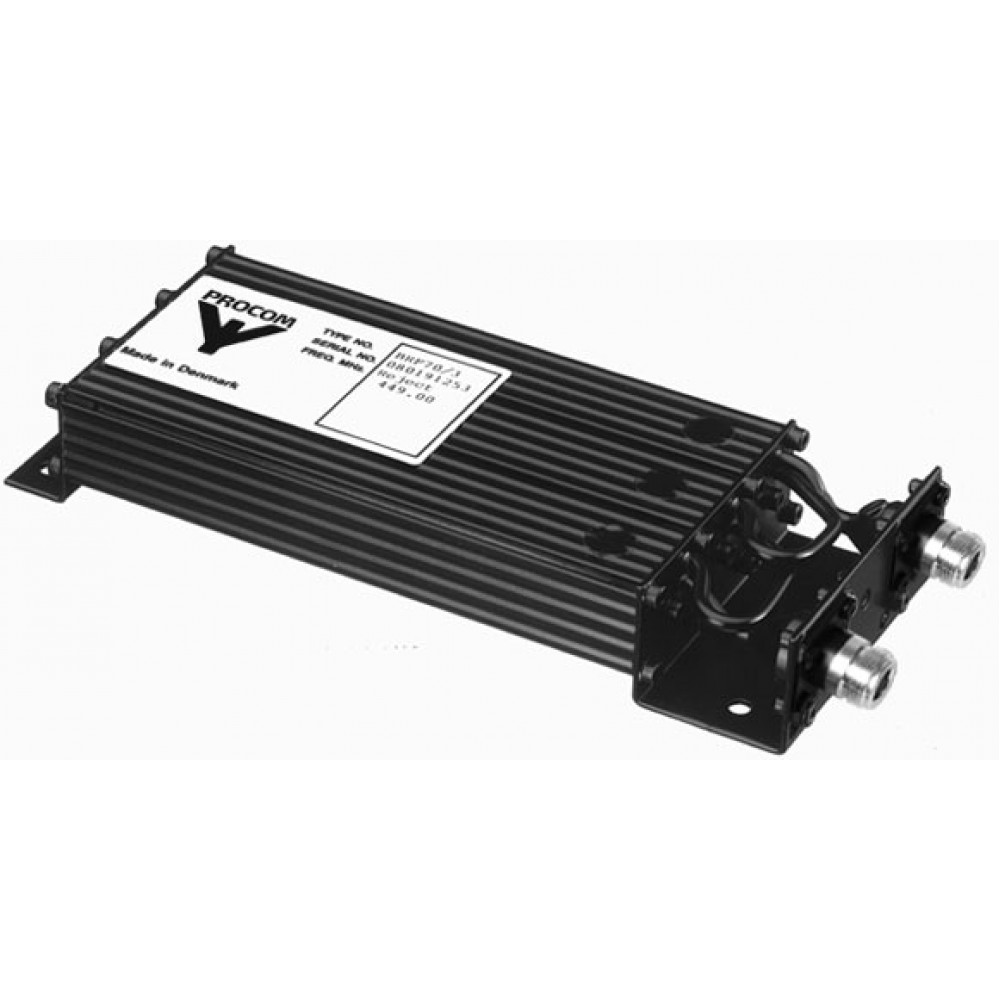
BPF 70/3

The BPF 70/3 is a 3-resonator notch-filter using full-length ¼ λ cavities.

This filter rejects a narrow band of frequencies and passes all others. The filter can be applied both in connection with transmitters and receivers to attenuate interfering signals which cause cross modulation effects. The filter can be employed as a single component or it can act as an integrated part of a complete multi-coupling system.

The BPF 70/3 can be tuned within the complete 406 – 470 MHz band. Careful design and choice of materials ensure reliable operation over a wide temperature range.
 

BPF 70/4

The BPF 70/4 is a 4-resonator notch-filter using full-length ¼ λ cavities.

This filter rejects a narrow band of frequencies and passes all others. The filter can be applied both in connection with transmitters and receivers to attenuate interfering signals which cause cross modulation effects. The filter can be employed as a single component or it can act as an integrated part of a complete multi-coupling system.

The BPF 70/4 can be tuned within the complete 380 – 470 MHz band. Careful design and choice of materials ensure reliable operation over a wide temperature range.
 

BPF 2/3

The BPF 2/3 is a 3-cavity notchfilter using helical resonators.

This filter rejects a narrow band of frequencies in the 2 m band and passes all others in the range 0 – 430 MHz. The filter can be applied both in connection with transmitters and receivers to attenuate interfering signals causing cross modulation effects. The filter can be employed as a single component or it can function as an integrated part of a complete multicoupling system.

The BPF 2/3 can be tuned within the complete 144 – 175 MHz band. Careful design and choice of materials ensure reliable operation over a wide temperature range.


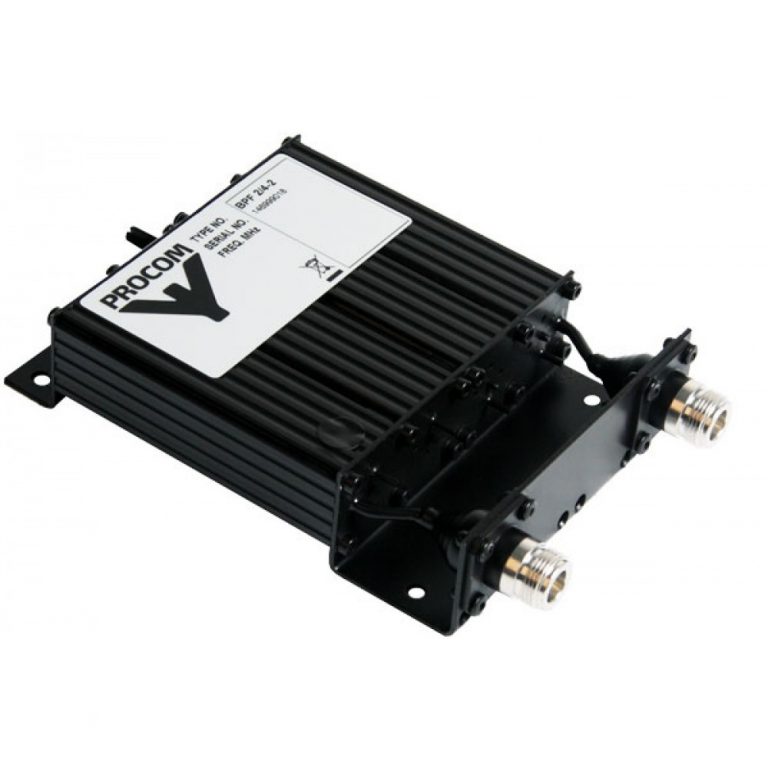
BPF 2/4

The BPF 2/4 is a 4-helical resonator band-pass filter with aperture coupling between the resonators. This filter can be used as a preselector to protect a receiver from interference from transmitters outside the band-pass limits.

The BPF 2/4-C (C = cable) can be installed directly into the PRO-AR4G-N, PRO-AR8G-N and PRO-AR16G-N receiver multicouplers as a preselector. When installed in the output of a transmitter, the BPF 2/4 reduces spurious signals.

The BPF 2/4 is adjustable over the range 144 – 175 MHz. Very compact due to use of helical resonators. Careful choice of materials ensures reliable performance over a wide temperature range.

Model Variations Frequency
BPF 2/4-2 N 2 MHz
BPF 2/4-4 N 4 MHz
BPF 2/4-6 N 6 MHz

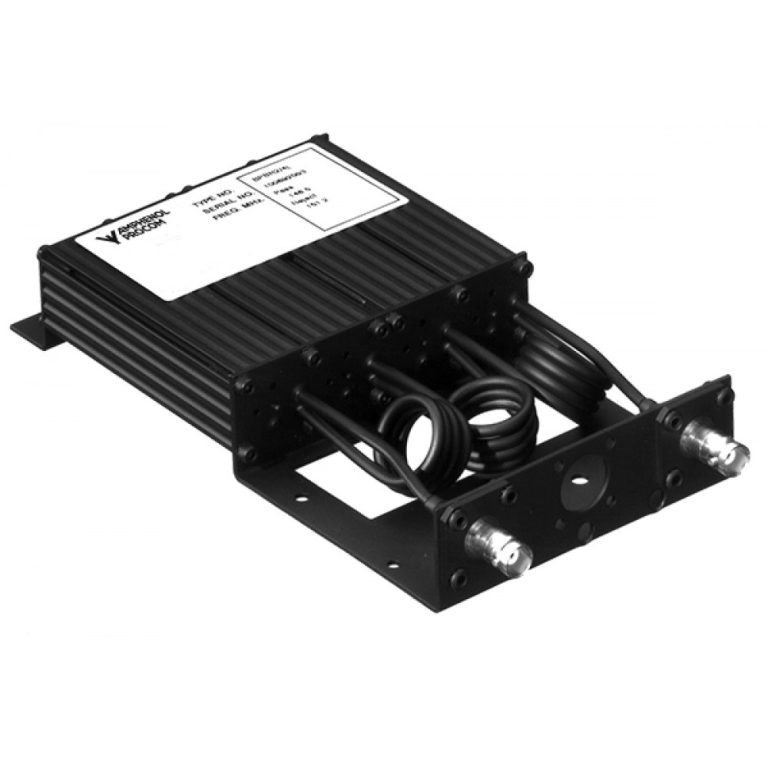
BPBR 2/4 BRBP 2/4

The BPBR 2/4 and the BRBP 2/4 are 4-cavity pass-reject filters, which pass one frequency or frequency band and reject another in immediate vicinity of the pass frequency.

The filters are delivered in two basic models: The BPBR-types have the reject range on the high side of the pass frequency and the BRBP-types have the reject range situated on the low side of the pass frequency.

These filter types can be used to protect a receiver against interference from a nearby transmitter. The filters are tuned to reject the interfering signal. Pass-reject-type filters are applied when the spacing between the utility signal and the interfering signal is so small, that the slope steepness of normal band-pass filters or notch filters are not sufficient enough to provide adequate rejection.

These filters are primarily intended to pass and reject two single frequencies, but the filters can also be tuned to pass and reject several single frequencies or to having a certain pass and reject port bandwidth. In these cases, factory-tuning is recommended.

Model Variations Spacing Frequency
BPBR 2/4 L-4/6 4 - 6 MHz 136 - 154 MHz
BPBP 2/4 L-4/6 4 - 6 MHz 136 - 154 MHz
BPBR 2/4 L-6/8 6 - 8 MHz 136 - 154 MHz
BPBP 2/4 L-6/8 6 - 8 MHz 136 - 154 MHz
BPBR 2/4 H-4/6 4 - 6 MHz 152 - 175 MHz
BPBP 2/4 H-4/6 4 - 6 MHz 152 - 175 MHz
BPBR 2/4 H-6/8 6 - 8 MHz 152 - 175 MHz
BRBP 2/4 H-6/8 6 - 8 MHz 152 - 175 MHz

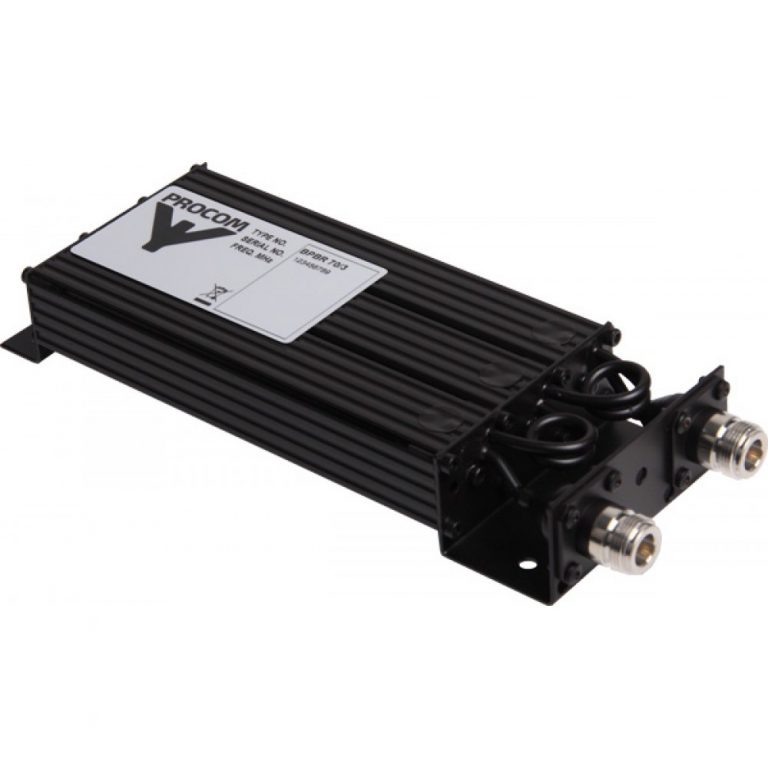
BPBR 70/3 BRBP 70/3

The BPBR 70/3 and the BRBP 70/3 are 3-cavity pass-reject filters, which pass one frequency or frequency band and reject another in immediate vicinity of the pass frequency.

The filters are delivered in two basic models: The BPBR-types have the reject range on the high side of the pass frequency and the BRBP-types have the reject range situated on the low side of the pass frequency.

These filter types can be used to protect a receiver against interference from a nearby transmitter. The filters are tuned to reject the interfering signal. Pass-reject-type filters are applied when the spacing between the utility signal and the interfering signal is so small, that the slope steepness of normal band-pass filters or notch filters are not sufficient enough to provide adequate rejection.

The filters are primarily intended to pass and reject two single frequencies, but the filters can also be tuned to pass and reject several single frequencies or to having a certain pass and reject port bandwidth. In these cases, factory-tuning is recommended.

Model Variations Pass/ reject spacing
Low pass high reject
BPBR 70/3-5/7 N 5 - 7 MHz
BPBR 70/3-7/9 N 7 - 9 MHz
BPBR 70/3-9/13 N 9 - 13 MHz
BPBR 70/3-13/16 N 13 - 16 MHz
Low reject high pass
BRBP 70/3-5/7 N 5 - 7 MHz
BRBP 70/3-7/9 N 7 - 9 MHz
BRBP 70/3-9/13 N 9 - 13 MHz
BRBP 70/3-13/16 N 13 - 16 MHz