
Industries / Bus & Coach
Two-way radio for
bus and coach fleets
Depot to driver across a whole region, on school runs, charter work, tours and scheduled services. We are the largest radio supplier to New Zealand's bus and coach industry, and most of the operators we work with have moved to push-to-talk over cellular — because a coach on a tour route is well outside any repeater, but rarely outside cellular coverage.
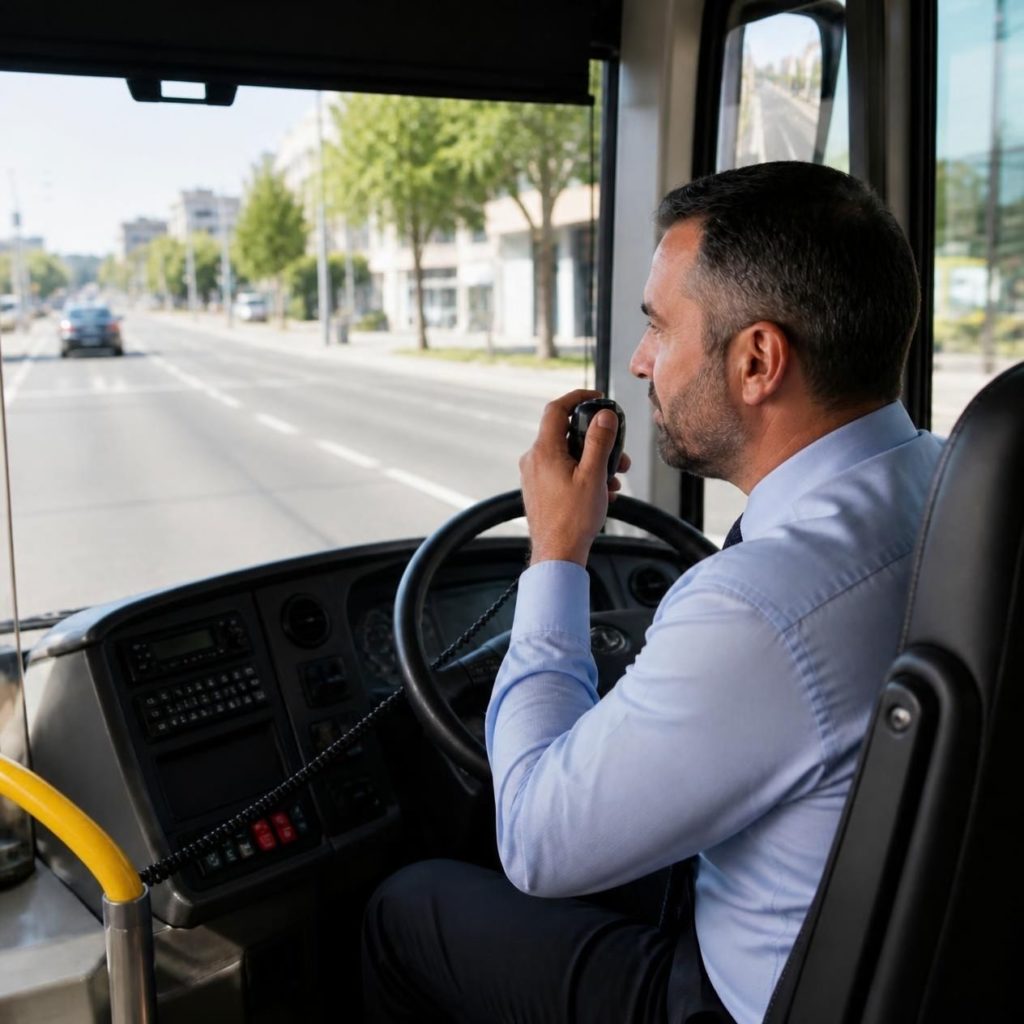
compliantBus radio solution, supplied, installed and supported by our own team.
What it is for
Safer drivers, and a fleet dispatch can actually see
A bus radio system earns its place twice: once when something goes wrong on the route, and every other day in running times, dispatch and service changes.
Driver safety
A driver is on their own with a vehicle full of passengers. The system has to put them in touch with the depot faster than a phone ever will.
- One press reaches the depot from anywhere on the route, whether it is a breakdown, an incident on board or a passenger who needs help.
- Coverage beyond the repeater, because PoC runs on the cellular network the coach is already driving through.
- Emergency calls land on a dispatch console, where someone is watching, rather than on one handset in one pocket.
- Vehicle location alongside the call, so dispatch knows where to send help without having to ask.
- Rural routes covered too, with in-vehicle routers and external aerials where a handheld signal drops away.
Operational efficiency
The same system that keeps drivers safe is the one that tells you where the fleet is and whether it is running to time.
- Running times and vehicle location on one screen, for every bus in the fleet.
- One dispatch office for many depots, because PoC does not care where the dispatcher sits.
- Service changes reach drivers during the run, to one vehicle, a route group or the whole fleet.
- RUC on the diesel fleet coming off the same tracking data.
- Changeovers that do not cost a service day, because we install at night.
What we fit
Everything on the bus, and everything behind it
Six parts, one supplier, and one team to call when something needs attention.
Push-to-talk over cellular
Instant voice between drivers and dispatch anywhere there is cellular coverage. The choice most of our bus and coach operators have made.
Explore PoC →PoC dispatcher
Every vehicle on one screen. Call a driver, a route group or the whole fleet, and see where each bus is while you do it.
Explore PoC dispatcher →Two-way radio and DMR
Licensed radio for operators who want their own network, or whose routes sit comfortably inside repeater coverage.
Explore LMR radio →GPS and fleet tracking
Running times, vehicle location and RUC on the diesel fleet, from one tracking unit on each bus.
Explore GPS →Vehicle Wi-Fi
In-vehicle routers and external aerials that hold a cellular connection on regional and rural routes.
Explore vehicle Wi-Fi →Installation and service
Our own technicians install, test and maintain the fleet, and change whole depots over at night.
Explore service →Operators we work with
Proven on New Zealand bus and coach fleets
Ritchies Transport, Tranzit and Howick & Eastern are among the operators we work with. Two examples of what that looks like, and the thing every operator asks about first.
Several dispatch teams, one dispatch office
Ritchies moved to push-to-talk over cellular and used the change to centralise multiple dispatch teams into one dedicated dispatch office.
Coverage on regional routes
For Tranzit we delivered a rural solution using in-vehicle routers and external aerials, improving coverage on regional bus routes.
A full depot in a week
We can change a full bus depot over to a new system within a week, working nights to keep disruption to the timetable to a minimum.
Industry membership
Members of the
Bus & Coach Association

We are members of the Bus & Coach Association New Zealand, the national body for the country's bus and coach industry. We are part of it because this is an industry we support, and one we understand.
- We support the industry. We stand alongside the operators, suppliers and manufacturers who keep New Zealand's buses and coaches running, not just sell to them.
- We understand the industry. Depots, timetables, school runs, charter and tour work, and the compliance that comes with running public transport. We design around how operators actually work.
- We stay close to it. Being part of the association keeps us in the same room as the people running the fleets, so our advice reflects the industry as it is today.
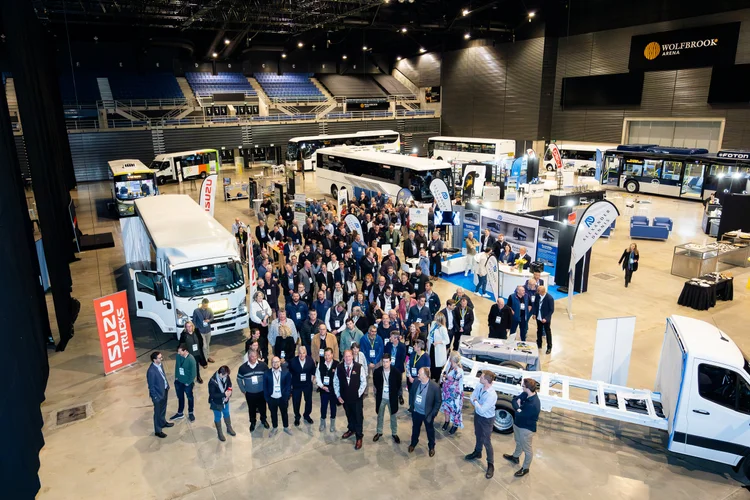
Operators, suppliers and manufacturers on the expo floor at the Bus & Coach Association conference.
How it runs
A depot changeover, without losing a service day
The real cost of a radio changeover is not the equipment. It is buses off the road while it goes in.
So we plan the work around your timetable, not ours. Our own technicians work nights, vehicle by vehicle, and we can move a full depot to a new system within a week.
Before that, we look at where your routes actually run. An urban network, a regional service and a tour route can each point to a different answer.
- Scope the fleet. Depots, routes, vehicle types and how dispatch is organised today — and how you would like it organised.
- Check the coverage. Where the routes run decides PoC, licensed radio or both, and which vehicles need a router and external aerial.
- Trial it. Put the system on a few vehicles and let drivers and dispatch use it before anything is committed.
- Install at night. Depot by depot, so buses are back on the road for the next day's services.
- Keep it running. Maintenance, repairs and support from the same team that installed it.
Common questions
Before you get in touch
Is your bus radio solution NZTA compliant?
Yes. We supply an NZTA-compliant bus radio solution. Tell us about the contracts you run and we will take you through how it applies to your fleet.
Should we move to PoC or stay on licensed radio?
Most of the operators we work with have moved to PoC, because a coach on a tour or regional route is often well outside repeater range but rarely outside cellular coverage. If your routes sit comfortably inside good repeater coverage, licensed radio can still be the right answer, and we will tell you so.
Will a changeover take buses off the road?
Not during service. We work nights and can change a full depot over to a new system within a week.
Can we run dispatch for several depots from one place?
Yes. Because PoC runs over cellular, the dispatcher does not need to be near a repeater. Ritchies Transport used their move to PoC to centralise multiple dispatch teams into one dedicated dispatch office.
Our regional routes have patchy coverage. What can you do?
This is usually solved on the vehicle rather than the network. For Tranzit we fitted in-vehicle routers and external aerials, which improved coverage on their regional bus routes.
Tell us how your fleet runs
Depots, routes and how dispatch works today. We will come back with what we would fit, and why.
sales@signals.co.nz · Christchurch & Auckland · on site nationwide