Industries / Traffic Management
Two-way radio for
traffic management
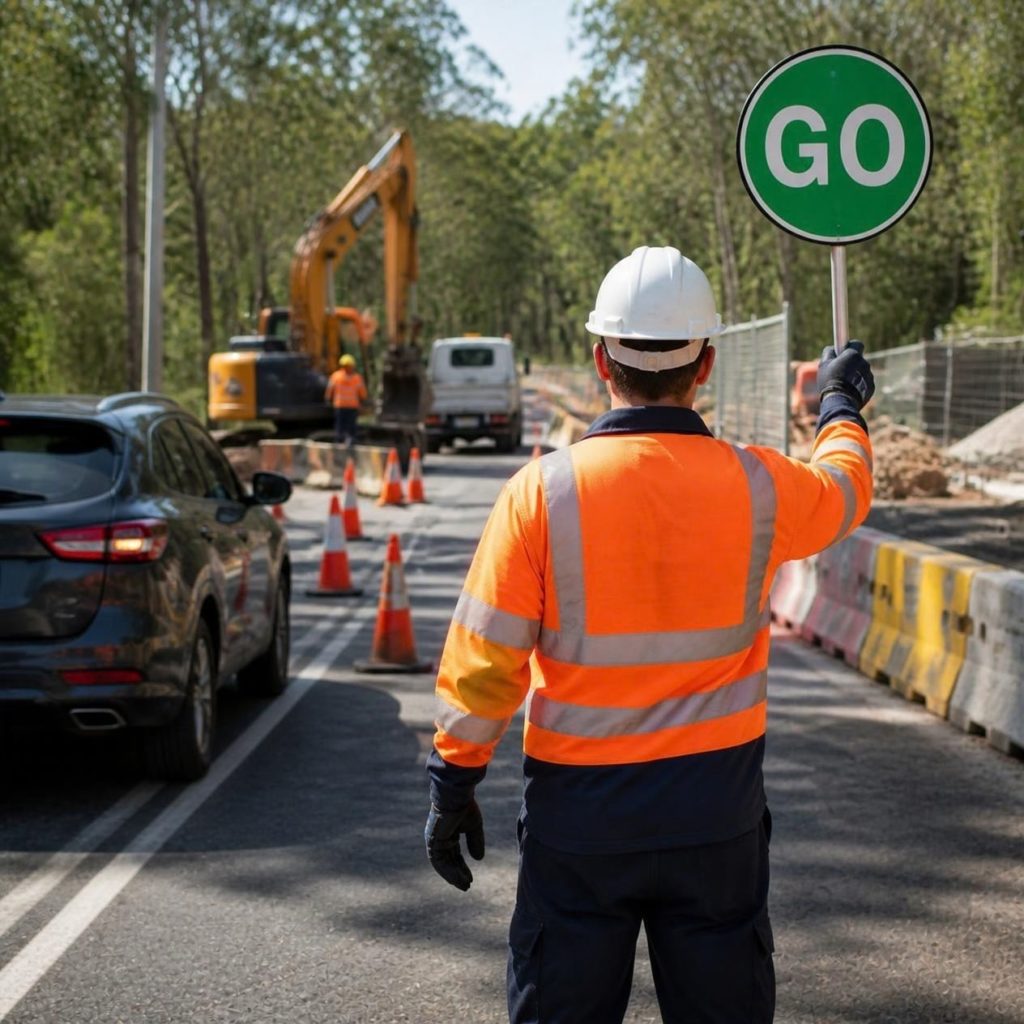
Crews strung out along a worksite, jobs that appear at short notice, and equipment that gets dropped, rained on and left in a ute overnight. We set traffic management companies up in one of two ways: licensed simplex radios for talk on site, or push-to-talk over cellular when crews, the office and dispatch need to stay connected across a region.
exclusiveNew Zealand distributor for the radios both our traffic management solutions run on.
What it is for
Safer sites, and crews that move when the job does
On a closure, the radio is part of the control. Between jobs, it is how work gets allocated. The right set-up does both.
Site safety
A worksite on a live road leaves no time to make a phone call. Everyone on the crew has to hear the same thing at the same time.
- Every person on the site warned at once, not one at a time, when a vehicle gets through or conditions change.
- Controllers at each end of a closure in constant contact, so only one end releases traffic at a time.
- Private channels for each crew, so instructions are not lost under the crew working the next job down the road.
- An SOS function on the advanced solution, so a controller in trouble can raise dispatch at the press of a button.
- Robust handhelds that stand up to rain, dust and being dropped on site.
Operational efficiency
Work shifts with little notice. The radio system decides how quickly a crew can be redirected.
- Short-notice jobs allocated without working through a phone list.
- The office and dispatch in continuous contact with crews across the region, not just within shouting distance.
- Multiple groups for multiple teams, so dispatch can call one crew or all of them.
- Low running cost for crews who only need to talk to each other on site.
- Extra radios from our rental fleet when an event or shutdown needs forty radios for a fortnight, rather than out of the capital budget.
Two solutions
Standard or advanced, depending on how far your crews spread
Most traffic management companies fit one of two patterns. We supply both on Kirisun radios, and we will tell you plainly which one you need.
Private channels, crew by crew
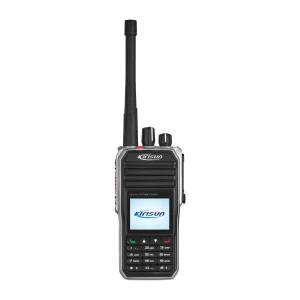
Kirisun DP405 DMR handhelds on licensed simplex channels, with the Kirisun DP680 as a premium option for harder conditions. Radio to radio, with no network to rely on, and every team on its own private channel.
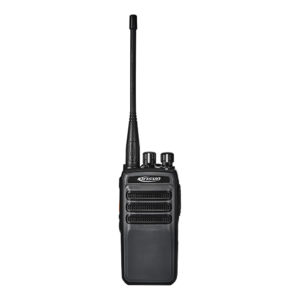
- Private channels for multiple teams working at the same time.
- Low cost to buy and to run, across a large workforce.
- Robust, simple devices crews pick up and use without training.
- Premium option: Kirisun DP680, with better water, dust and drop protection. IP67 water and dust proof, and MIL-STD 810 rugged.
- Licensing handled by us, with national simplex frequencies available immediately.
Best forCrews working within one site or closure, who mainly need to talk to each other.
Every crew, the office and dispatch, across the region
Kirisun T60 and T65 push-to-talk over cellular handhelds, managed from a dispatcher console, with coverage wherever the cellular network reaches.
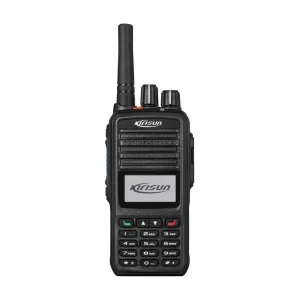
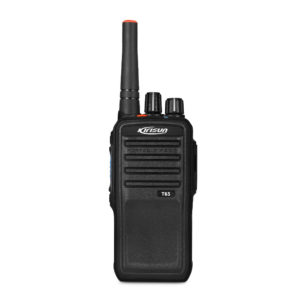
- A dispatcher console that can see and call every crew.
- SOS function for controllers who get into trouble on site.
- Multiple groups set up for different teams.
- Wide-area coverage, crew to office to dispatch, without a repeater.
Best forOperators running crews across a region, with an office and dispatch that need to reach them all day.
Case studies
Proven on New Zealand traffic management crews
One operator on each solution: Traffix on standard simplex in Auckland, and Avada Traffic on push-to-talk over cellular across the South Island.
Traffix
Traffix is an Auckland traffic management company delivering end-to-end temporary traffic management, from plan design and RCA submission through to setup, monitoring and pack-down. Its work covers civil construction, utilities and essential infrastructure, roading and maintenance, events, and film and television, backed by a 24/7 emergency and reactive response.
The challenge
Traffix runs its own qualified in-house crews rather than labour hire, and several teams can be on different jobs at once. Each crew needs clear talk between its own people without picking up the crew on the next site, on radios that survive daily site use and stay affordable across the whole workforce. Work also shifts at short notice, so the radios have to be simple enough to hand out and use straight away.
What we supplied
Kirisun DP405 DMR handhelds on licensed simplex, programmed with private channels so multiple teams can each work on their own.
The result
A low-cost, effective system on robust devices. Each crew talks on its own channel, the radios stand up to site work, and there is no network in between to go wrong.
- Operator
- Traffix, Auckland
- Work
- Utilities, construction, roading and events
- Radios
- Kirisun DP405 DMR handhelds
- Set-up
- Licensed simplex, private channels for multiple teams
Avada Traffic
Avada Traffic's crews work across a wide area of the South Island, with an office and dispatch that need to stay in touch with every team, wherever the job is.
What we supplied
Kirisun T60 and T65 push-to-talk over cellular handhelds, a dispatcher console, the SOS function, and multiple groups set up for different teams.
The result
Wide coverage across the South Island, and continuous communication between crews, the office and dispatch, with an SOS function on hand for crews in the field.
- Operator
- Avada Traffic, South Island
- Radios
- Kirisun T60 and T65 PoC handhelds
- Set-up
- Dispatcher, SOS, multiple groups for different teams
- Coverage
- Wide-area, across the South Island
What we fit
Everything a traffic management fleet runs on
Six parts, one supplier, and one team to call when something needs attention.
Two-way radio and DMR
Licensed simplex for on-site talk, the backbone of our standard traffic management solution.
Explore LMR radio →Push-to-talk over cellular
Instant voice between crews, the office and dispatch, anywhere there is cellular coverage.
Explore PoC →PoC dispatcher
Every crew on one screen. Call one team, a group or everyone, and see the SOS when it comes in.
Explore PoC dispatcher →Short-term hire
Extra radios for an event, a shutdown or a big job, without adding to the capital budget.
Explore radio hire →GPS and fleet tracking
Know where every traffic management truck and crew vehicle is, from one tracking platform.
Explore GPS →Installation and service
Our own technicians programme, install and repair, so radios get back to work quickly.
Explore service →Getting set up
Licensed, programmed and on site quickly
Licensing is usually the step people expect to be slow. For simplex, it is not.
We apply for the licence, coordinate the frequencies, hold it on your behalf and manage the renewals. National simplex frequencies are available immediately, so a standard set-up is not left waiting on paperwork.
For the advanced solution, we set up the groups for each team and the dispatcher, and configure the SOS function before the radios go out.
- Scope the work. How many crews, how far apart they work, and who needs to reach them.
- Pick the solution. Standard simplex, advanced PoC, or a mix of both for different parts of the business.
- Licence and programme. Private channels or groups for each team, set up before delivery.
- Trial it. Demo handhelds from our fleet, so crews can try the radios on a real job first.
- Keep it running. Repairs, reprogramming and support from the same team that set it up.
Common questions
Before you get in touch
Should we go standard or advanced?
If your crews mostly work within one site or closure and talk to each other, the standard simplex solution does the job at low cost. If crews are spread across a region and the office or dispatch needs to reach them all day, the advanced PoC solution is the better fit. Some operators use both.
Do we need a licence for site radios?
Simplex radio channels are licensed. We apply, coordinate frequencies, hold the licence and manage renewals for you, and national simplex frequencies are available immediately.
Can each crew have its own channel?
Yes. On the standard solution each team gets its own private channel, as Traffix runs. On the advanced solution each team is its own group, and dispatch can call one group or all of them.
How does the SOS function work?
On the advanced solution, the Kirisun T60 and T65 handhelds have an SOS function that raises the alarm with dispatch, so a controller in trouble does not have to make a call to get help.
Can we hire radios for a short job or event?
Yes. When a shutdown or an event needs extra radios for a few weeks, they come out of our rental fleet rather than your capital budget.
Tell us how your crews work
How many crews, how far apart, and who needs to reach them. We will tell you whether standard or advanced suits, and why.
sales@signals.co.nz · Christchurch & Auckland · on site nationwide